Drone as a Service in Nigeria: Outsource or Buy?
Buying a drone looks like the cheaper option. On a quotation, it usually is.
The quotation just leaves several things out. Pilots, approvals, maintenance, insurance, software and data processing all arrive afterwards. Drone as a service in Nigeria exists because those hidden items often cost more than the aircraft.
What ownership actually commits you to
An organisation that buys a fleet takes on an aviation department, whether it planned to or not.
You need licensed pilots, so you recruit and train them. Then you need to retain them, which becomes its own challenge once they are certified. Regulatory approvals require ongoing management, not a one-off application.
Maintenance follows. Aircraft need servicing, propellers wear, batteries degrade and payloads need calibration. Meanwhile, the technology keeps moving, so hardware bought today looks dated within a few years.
Finally, raw imagery is not a deliverable. Someone has to process it into something an engineer can use.
What the service model removes
Drone as a service in Nigeria replaces all of that with an outcome.
You describe the mission. We arrive with the aircraft, the crew and the approvals, then deliver the processed report. Nothing sits on your balance sheet, and nothing waits in a store room between campaigns.
The comparison runs simply:
- No capital expenditure instead of buying hardware
- NCAA-certified crews instead of recruiting and retaining pilots
- Managed maintenance instead of servicing and repairs
- Regulatory compliance handled instead of chasing approvals
- Actionable reports delivered instead of raw data to process
- Always current technology instead of ageing equipment
- Immediate nationwide deployment instead of building capability first
When outsourcing clearly wins
Several situations favour the service model strongly.
Inspection campaigns that run quarterly or annually rarely justify a fleet. Specialist payloads make the case even clearer, since LiDAR and multispectral sensors cost heavily and sit idle between jobs.
Geographically spread assets favour outsourcing too. Rather than moving one internal team across the country, a service provider mobilises from the nearest base.
New programmes also start better this way. You prove the value before committing capital, which is a far easier internal conversation.
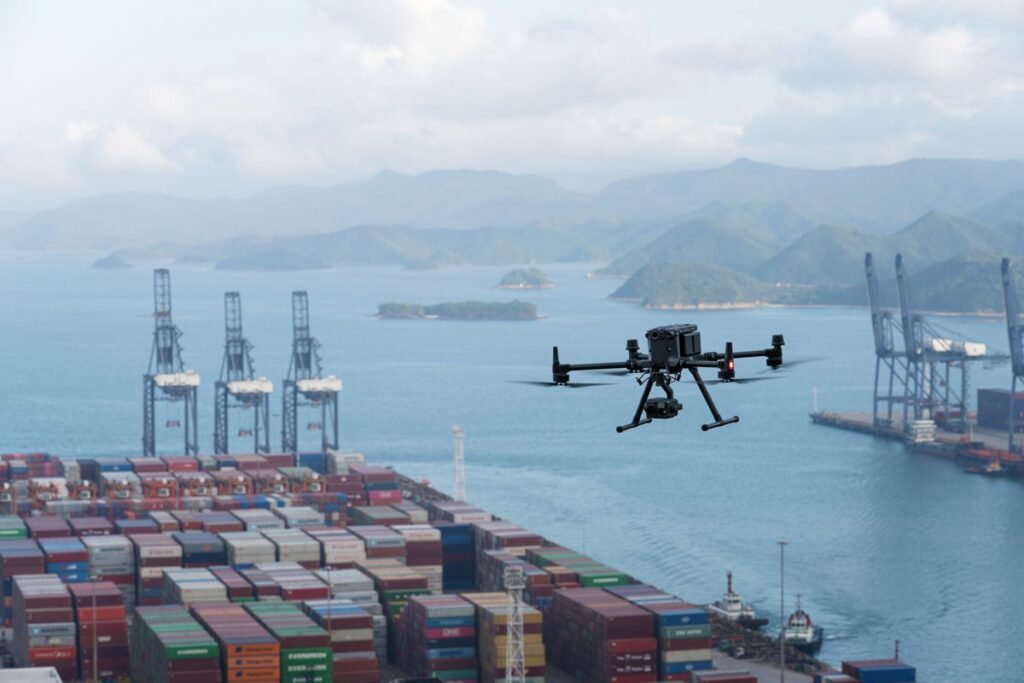
The DJI Enterprise fleet you access without buying it
Outsourcing does not mean settling for lesser equipment. Instead, it means reaching the right platform for each mission rather than the one you happen to own.
Our deployed fleet covers the range:
- Matrice 4T — general industrial inspection of towers, tanks, flare stacks and substations
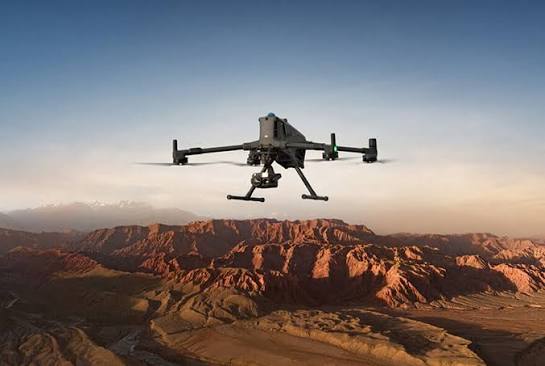
- Matrice 350 RTK — the carrier for specialist payloads, including Zenmuse H30T zoom and thermal, Zenmuse L2 LiDAR, and Zenmuse P1 photogrammetry
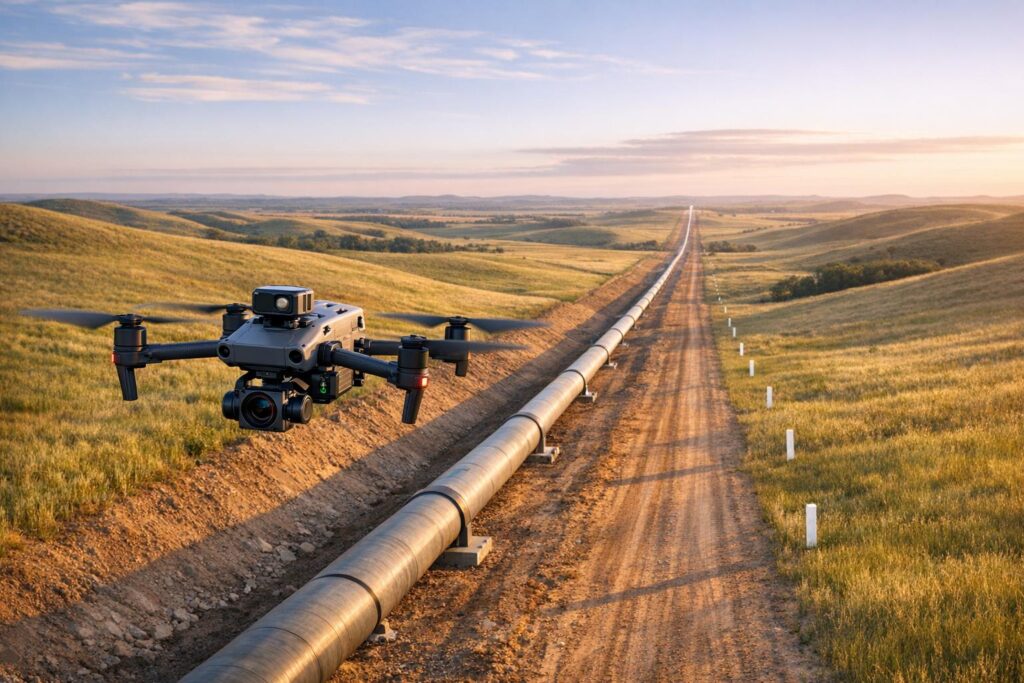
- Matrice 400 — extended range and endurance for long pipeline and transmission corridors
- DJI Dock 3 — automated, crewless coverage on a fixed schedule
- Mavic 3 Enterprise series — rapid deployment for compact sites and progress checks
Mission planning and analytics run through DJI FlightHub 2.
Buying that range outright, then keeping it current, is precisely the cost the service model removes.
When buying still makes sense
Ownership is not always wrong, and pretending otherwise helps nobody.
Daily flying is the clearest case. If a site needs a flight every morning, an internal team makes sense. Security-sensitive work sometimes requires internal control. Some organisations also have a mandate to build capability rather than buy it.
We support that route directly. As Nigeria’s first and only DJI Enterprise Authorized Reseller and Enterprise Solutions Partner, we supply, configure and commission platforms, then train your crew through ARCO Aviation Academy.
The blended model most clients settle on
In practice, the two options rarely stay separate.
Routine, high-frequency work moves in-house once a team is trained. Specialist missions stay with us, because BVLOS corridor monitoring, LiDAR survey and thermal inspection need capability that is expensive to build for occasional use.
As a result, you keep daily control while avoiding the cost of rare expertise.
What our service covers
One managed service includes the whole chain:
- Enterprise drone fleet and payloads
- NCAA-certified flight crews
- Regulatory approvals and compliance
- Mission planning and risk assessment
- Maintenance and fleet upkeep
- Data processing and AI analytics
- Actionable reporting and recommendations.
Why the operator matters
Aviation is regulated for good reason, so the provider’s standing is part of the decision.
ARCO Worldwide is Nigeria’s first licensed commercial drone operator, authorised by the NCAA and approved by the Office of the National Security Adviser. Our operations run under ISO 9001:2015 certification. Behind that sit more than 15,000 flight hours, over 70 pilots and crew, and bases in Lagos, Abuja and Port Harcourt.
Start with the outcome
The right question is never which drone to buy. It is what decision you need the data to support.
Answer that, and the delivery model follows. Often the answer is a service rather than a fleet.
Ready to scope your first campaign? Talk to ARCO Worldwide today.