Nigerian content obligations shaped how the industry buys welding, catering, logistics and engineering. Aerial services arrived later, and the thinking has not fully caught up.
Operators still treat drone inspection as a technology purchase rather than a service contract. Consequently, local content in oil and gas services often gets applied carefully to everything except the aircraft overhead.
Why aerial services sit in a grey area
The confusion is understandable.
Drone work looks like equipment supply. A vendor arrives with a case, flies, and leaves with data. That resembles a procurement transaction more than a service engagement.
However, the substance is entirely different. The aircraft is a small part of the delivery. Licensed crews, regulatory approvals, mission planning, data processing, reporting and ongoing support make up the rest, and all of that is service.
Therefore the content question applies in full. Who holds the authorisation. Where are the crews based. Who processes the data, and where. What capability remains in the country afterwards.
What foreign-supplied aerial services usually lack
Several gaps appear repeatedly when capability is imported rather than held locally.
Regulatory standing. Flying commercially in Nigeria requires NCAA authorisation held by the operating entity. A visiting team working under someone else’s certificate is not the same thing, and the exposure sits with the operator who commissioned the work.
Mobilisation. A crew flown in for a campaign cannot respond to an incident three weeks later. Asset integrity rarely follows a schedule.
Terrain familiarity. Niger Delta creek systems, harmattan conditions and community access realities are learned, not briefed.
Retained capability. When the campaign ends, the capability leaves with it. Nothing accrues to the Nigerian supply chain.
What local capability actually means here
It is worth being precise, because “local” is frequently claimed and less frequently held.
Genuine local capability means the operating certificate is Nigerian. The crews are Nigerian, trained in Nigeria. The maintenance capability is here. The data processing happens here. The training pipeline that replaces those crews is here too.
ARCO Worldwide is Nigeria’s first licensed commercial drone operator, authorised by the NCAA and approved by the Office of the National Security Adviser, operating under ISO 9001:2015 certified processes with bases in Lagos, Abuja and Port Harcourt.
ARCO Aviation Academy, our training arm, is Nigeria’s first NCAA-licensed drone training institution. That is the part most difficult to import and most valuable to retain.
The capability is not a compromise
Local content arguments sometimes carry an implied trade-off. There is no reason for one here.
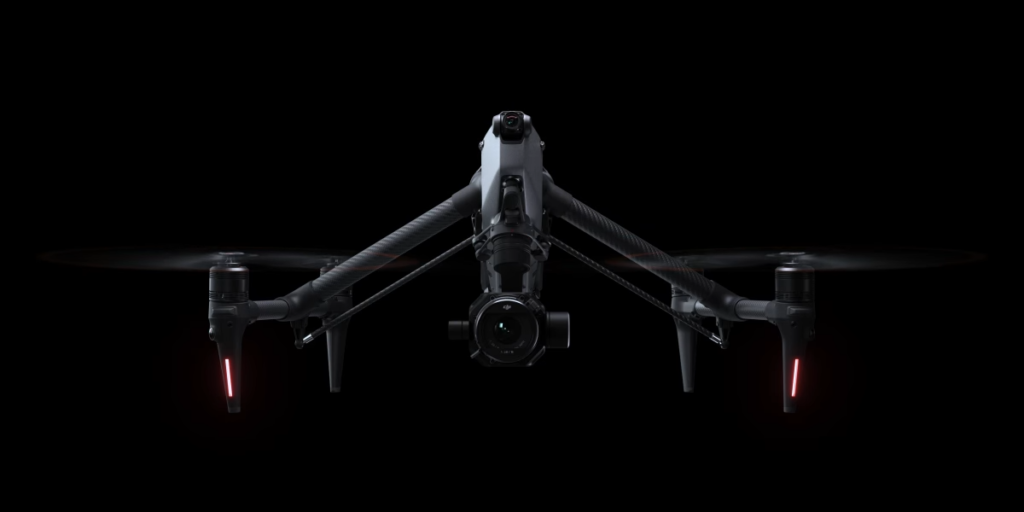
We deploy the same platforms specified on international campaigns. The Matrice 350 RTK with the Zenmuse H30T for facility, flare and offshore inspection. The Zenmuse L2 for LiDAR survey and the Zenmuse P1 for photogrammetry. The Matrice 400 for long pipeline and corridor coverage. DJI Dock 3 with the Matrice 4TD for automated, continuous monitoring. Flyability platforms for tanks, caissons and confined spaces.
As Nigeria’s first and only DJI Enterprise Authorized Reseller and Enterprise Solutions Partner, we supply and support that equipment as well as operate it.
The data question that follows
Capture is no longer where the difficulty sits. Interpretation and management are.
That applies to content obligations too, because data processed offshore delivers less local value than data processed here. Our partnership with ROAV7 deploys the Perseus platform locally in Nigeria, giving stakeholders secure cloud access to point clouds, orthomosaics and editable inspection reports.
So the full chain, from flight to deliverable, stays in country.
What procurement teams should ask
Four questions separate genuine local capability from a local address.
- Who holds the NCAA operator authorisation for this work?
- Where are the crews based, and where were they trained?
- Where is the data processed and stored?
- What capability remains in Nigeria after the contract ends?
Clear answers are straightforward to provide. Vague ones indicate the arrangement is a flag of convenience.
Aerial inspection belongs in the content plan
Nigeria’s drone capability is no longer emerging. It is operating, certified and competing on standard rather than on preference.
Local content in oil and gas services should reflect that, and the aerial line in a contract should be assessed the same way every other service line already is.
Ready to discuss a campaign? Talk to ARCO Worldwide today.