Most buyers compare the cameras. That is the wrong comparison, and it leads to expensive mistakes.
A flagship consumer aircraft often carries a better camera than an industrial platform. Consumer vs enterprise drones is not a question of image quality. It is a question of whether the aircraft can do a job repeatedly, in poor conditions, with the sensor the work actually requires.
Where the consumer range sits
DJI’s consumer and creator line covers the Mini, Air and Mavic Pro families, including the Mavic 4 Pro.
These are excellent aircraft. They fold into a bag, fly beautifully and produce broadcast-quality footage. For film, content, real estate and events, they are frequently the right choice.
What they are not designed for is swapping sensors, flying in rain, integrating with a dock, or feeding a fleet management system.
The six differences that matter
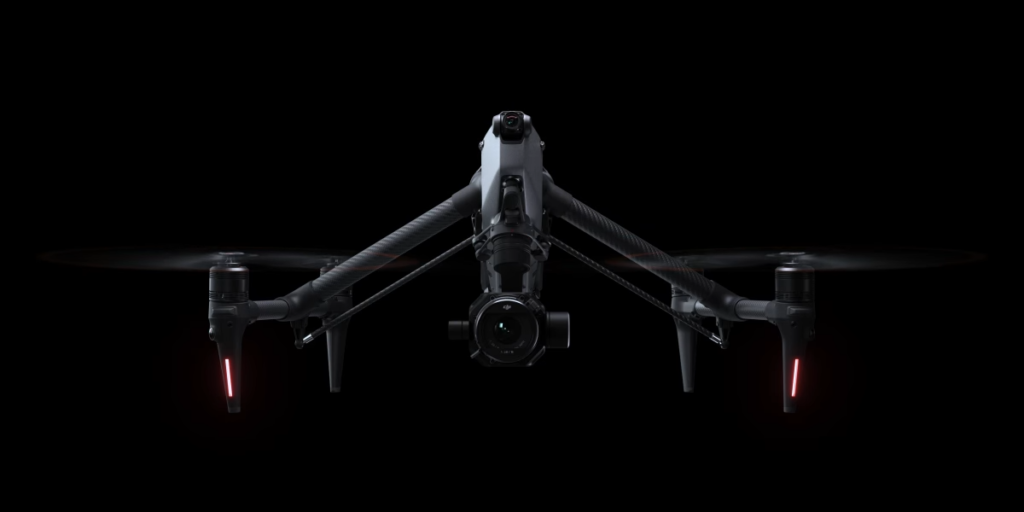
Payload interchangeability. Consumer aircraft carry a fixed camera. The Matrice 350 RTK and Matrice 400 accept the Zenmuse range, so the same airframe handles zoom and thermal with the H30T, LiDAR with the L2, or survey-grade photogrammetry with the P1. You buy one aircraft and change the sensor to the mission.
RTK positioning. Survey-grade accuracy depends on it. Without RTK, you produce attractive imagery that cannot be used for volumetrics, boundaries or engineering measurement.
Weather resistance. Enterprise platforms carry IP ratings. The DJI Dock 3 holds IP56 and the Matrice 4TD inside it holds IP55, operating from -30°C to 50°C. A consumer aircraft stays on the ground in rain, and in Nigeria that removes a significant part of the year.
Thermal. The Matrice 4T, Mavic 3T and Zenmuse H30T all carry infrared. Thermal is not a premium feature in industrial work. It is how you find a loose connector, a failed diode, a seepage zone or a person in darkness.
Automation and docks. The Matrice 4D and 4TD are built to live inside a dock and fly unattended on a schedule. No consumer aircraft does this.
Fleet and data management. DJI FlightHub 2 manages routes, fleets and mission data across an organisation. Consumer aircraft are managed one phone at a time.
Matching the range to the job
Several platforms cover most requirements.
Mavic 3 Enterprise series suits teams moving constantly between sites. The 3E maps, the 3T adds thermal, the 3M carries multispectral bands for crop work.
Matrice 4T is the sensible default for general industrial inspection: towers, flare stacks, storage tanks, bridges and substations. The 4E drops thermal and focuses on mapping.
Matrice 350 RTK is the carrier when a specialist sensor decides the job.
Matrice 400 extends range and endurance for long pipeline, transmission and border corridors.
DJI Dock 3 with the Matrice 4TD replaces repeated crew visits with scheduled autonomous flights.
Agras handles spraying, spreading and seeding at agricultural scale.
The part that costs people money
A consumer aircraft bought for industrial work usually fails on one of three things.
It cannot carry the sensor the job needs. It cannot fly on the day the inspection is scheduled. Or the data it produces cannot be processed to the accuracy the engineer requires.
By the time that becomes clear, the budget is spent and the programme has stalled.
Support is part of the specification
Enterprise ownership includes configuration, commissioning, spares, firmware management and crew training. None of that comes with a consumer purchase.
ARCO Worldwide is Nigeria’s first and only DJI Enterprise Authorized Reseller and Enterprise Solutions Partner. We supply, configure and commission the platform, then train your crew through ARCO Aviation Academy, Nigeria’s first NCAA-licensed drone training institution. Our catalogue runs past 35 products including payloads, docks, ground stations, software and spares.
Buy for the mission, not the spec sheet
The right question is never which drone has the best camera. It is what decision you need the data to support, and under what conditions you need to collect it.
Answer that, and the consumer vs enterprise drones question answers itself.
Ready to specify the right platform? Talk to ARCO Worldwide today.