DJI Dock 3 Explained: Is It Right for Your Site?
Most drone programmes run on crews. Someone drives to site, flies the mission, and drives back.
That model works until the driving becomes the constraint. DJI Dock 3 removes it entirely, though not every site justifies doing so. Here is how the system works and how to judge whether yours does.
What the system actually is
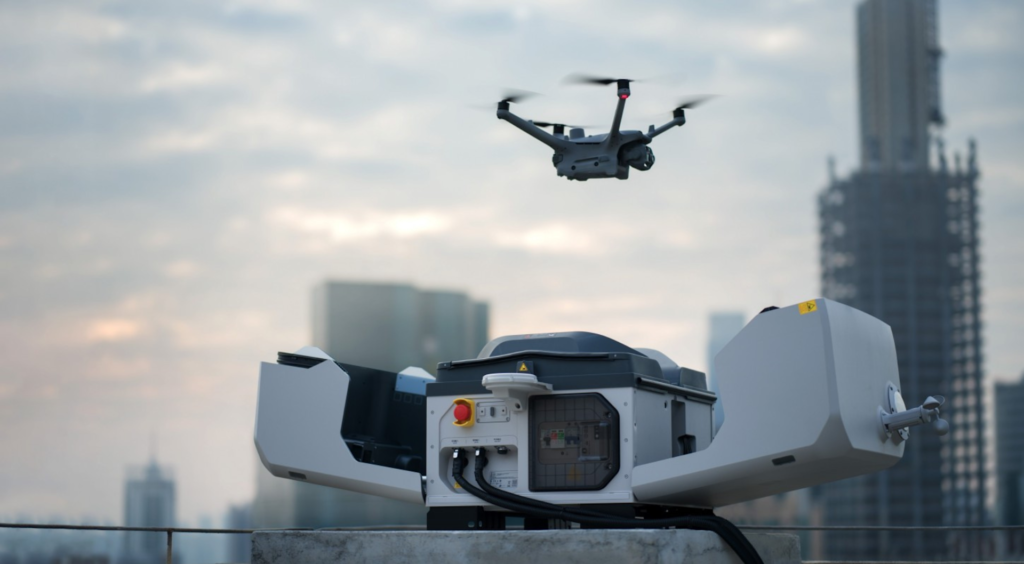
Dock 3 is a weatherproof enclosure that houses, charges and launches a drone without anyone present.
Missions run on a schedule, or they trigger from an alarm or an operator command. Afterwards, the aircraft returns, recharges and stands ready. Nobody travels, and nothing waits for a crew to become available.
It pairs with the Matrice 4D and Matrice 4TD, the dock-native versions of DJI’s compact enterprise airframe.
The specifications that matter in Nigeria
Several numbers decide whether a system survives local conditions.
The dock carries an IP56 rating, while the aircraft holds IP55 protection. Operating temperature spans -30°C to 50°C, so heat and harmattan dust do not interrupt operations. Take-off happens in roughly ten seconds, which matters most for alarm-triggered response.
Transmission reaches up to 25 kilometres. Consequently, a single dock covers a meaningful stretch of pipeline, corridor or concession rather than just its immediate surroundings.
How the intelligence works
Hardware alone would only automate the flying. The software decides what the flights are worth.
Through DJI FlightHub 2, automated routes detect vehicles, vessels and infrared temperature anomalies without anyone watching a live feed. Change detection then compares each flight against the previous one, flagging new construction, encroachment, excavation or activity.
So the output is not hours of footage. It is a short list of what changed since yesterday.
Fixed or mobile
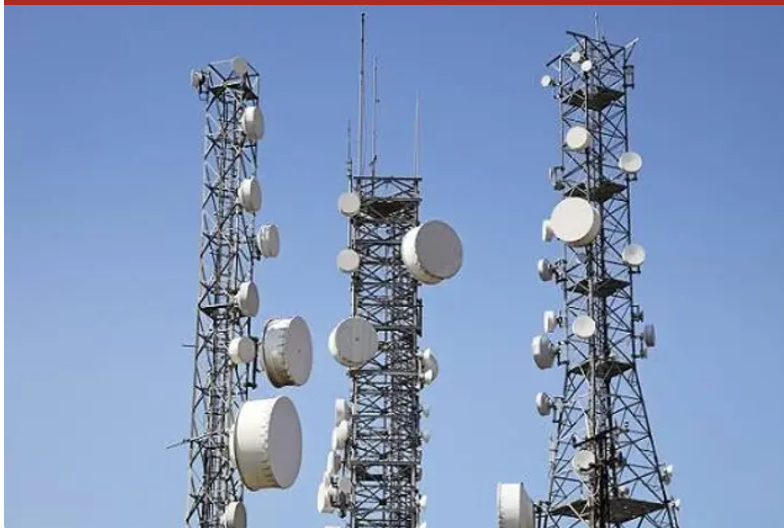
Permanent installation suits sites with a lasting requirement, including terminals, substations, refineries and remote telecom locations.
Vehicle-mounted deployment, new to this generation, works differently. The same system relocates as coverage needs shift, which suits an active construction phase, a temporary security requirement or a seasonal operation.
Which sites justify a dock
Three conditions make the case strongly.
Repetition. The same route needs flying regularly. Daily or multiple times daily moves the economics decisively.
Travel cost. The site is remote, access is difficult, or crew mobilisation consumes most of the working day.
Gap risk. Something meaningful can happen between scheduled visits. Pipeline corridors, concession perimeters and unmanned facilities all fit here.
Meet two of those three, and a dock usually pays. Meet one, and a crewed platform probably serves you better.
When a crewed platform remains the right answer
Automation suits repetition, not variety.
Detailed inspection still needs judgement at the controls, so we deploy the Matrice 350 RTK with the Zenmuse H30T for close structural work and incident response. Survey campaigns requiring LiDAR or photogrammetry need specialist payloads a dock aircraft does not carry.
One-off assessments rarely justify installation either. In those cases, a crew with a Matrice 4T arrives faster than a procurement process completes.
Regulation comes before installation
A dock does not exempt anyone from aviation rules.
Automated and beyond visual line of sight operations require NCAA authorisation, documented procedures and qualified oversight. Therefore the approvals question should come before the hardware question, not afterwards.
ARCO Worldwide is Nigeria’s first licensed commercial drone operator, authorised by the NCAA and approved by the Office of the National Security Adviser, with BVLOS-capable operations under ISO 9001:2015 certified processes.
Two routes to deployment
You can own the system or use it as a service.
As Nigeria’s first and only DJI Enterprise Authorized Reseller and Enterprise Solutions Partner, we supply, configure and commission DJI Dock 3, then train your team through ARCO Aviation Academy.
Alternatively, our Drone as a Service model delivers the coverage without the capital purchase. We install, operate and maintain the system, and your team receives the reports.
Decide on the mission, not the technology
A dock is impressive equipment. That is not a reason to install one.
The right question is whether your site has a route worth flying repeatedly, and a gap worth closing. If it does, DJI Dock 3 closes that gap better than any crewed alternative.
Ready to assess whether your site qualifies? Talk to ARCO Worldwide today.