Nigeria’s national grid has collapsed multiple times in 2026 alone, plunging major cities into darkness within hours of each other. Experts keep pointing to the same root causes: aging transmission lines, undetected faults, and a system running far below the capacity the country actually needs. So power line inspection Nigeria relies on has to catch problems long before they cascade into a nationwide blackout.
Here’s why the current approach keeps falling short, and what closes the gap.
A Pattern That Keeps Repeating
In January 2026 alone, Nigeria’s grid collapsed twice within four days. Generation dropped to zero megawatts both times, and every distribution company across the country recorded zero load allocation. That wasn’t an isolated event either. The grid failed nine times in 2024, and further collapses followed in December 2025 and again in early 2026.
Analysts have traced this pattern to a consistent set of causes. Aging transmission infrastructure, inadequate spinning reserve, and unresolved system disturbances all keep exposing the grid to sudden failure. Regulatory data backs this up too. Nigeria’s national transmission loss factor stood well above the approved benchmark for years running, even as it slowly improved.
Why Undetected Faults Are Central to the Problem
A national grid this size cannot be monitored corner to corner by hand. Yet that’s largely how inspection still happens across much of the network.
Manual tower climbing and ground-based checks cover only a fraction of the corridor at a time. So a corroding joint, a loose connection, or a vegetation encroachment near a live line can go unnoticed for weeks. By the time it causes a fault, the damage has already started a chain reaction across the interconnected grid.
Regulators have started responding to this visibility gap directly. New requirements now call for regional transmission loss reporting and smart meter installation at interconnection points. Both moves aim to catch problems earlier, but reporting alone doesn’t fix a fault sitting untouched on a transmission tower.
Where Aerial Inspection Closes the Gap
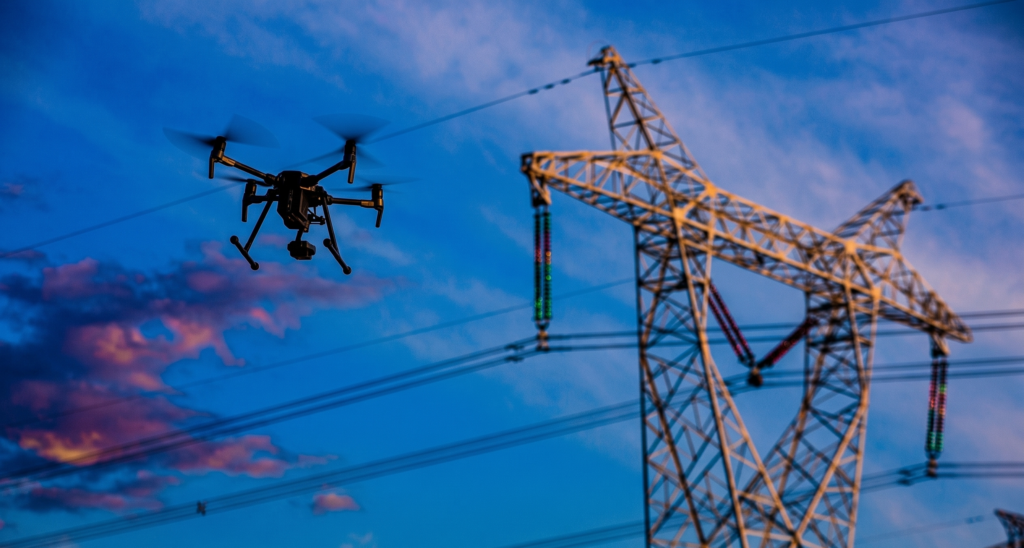
This is exactly the gap persistent aerial inspection is built to close. Instead of climbing towers one at a time, an inspection drone covers entire corridors in a single mission, at a fraction of the cost and risk.
ARCO Worldwide uses the DJI Matrice 4T for exactly this purpose. Its thermal camera identifies hotspots on power lines, towers, and substations long before they escalate into a fault. Its AI-driven smart detection also flags vegetation encroachment and structural irregularities automatically, cutting analyst review time.
For longer transmission corridors, the DJI Matrice 400 extends that coverage further. With close to 60 minutes of endurance and RTK precision navigation, it surveys extensive stretches of network in a single flight, something ground crews simply cannot match.
Why the Right Standard Matters for Critical Infrastructure
Inspecting national power infrastructure isn’t a casual drone use case. It demands the same rigor as any other critical infrastructure work.
ARCO Worldwide is Nigeria’s first licensed commercial drone operator, authorised by the NCAA, and ISO 9001:2015 certified across our inspection and reporting processes. That combination means GenCos, TCN, and DisCos get more than aerial footage. They get consistent, audit-ready inspection data delivered to an international quality standard.
Prevention Starts With Visibility
Nigeria’s grid problems won’t be solved by patrol schedules or manual checklists alone. Every collapse traced back to an undetected fault is a reminder that visibility, not just infrastructure spend, is the real bottleneck.
Persistent aerial inspection won’t rebuild the national grid overnight. But it catches the faults that cause the next collapse, long before they cascade.
Ready to close the inspection gap on your transmission network? Talk to ARCO Worldwide today.