The Towers Nobody Saw Being Stripped
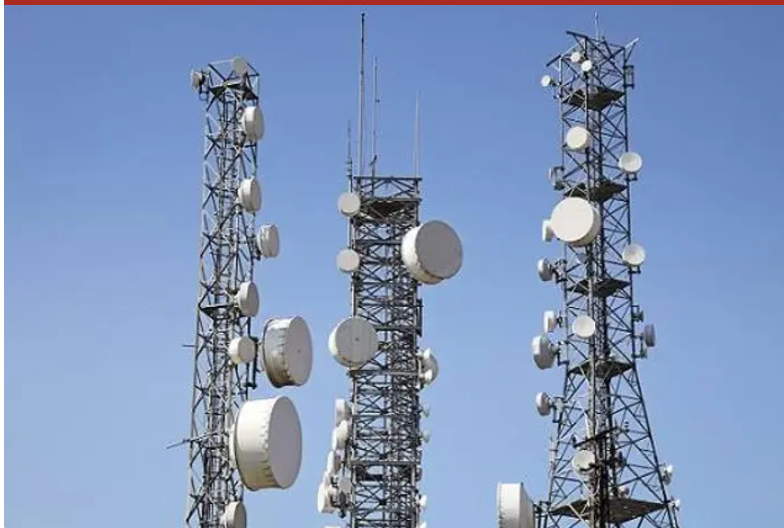
Six towers. One hundred and thirty missing bracing members. A transmission line left standing on borrowed time. TCN engineers made that discovery along the Yola-Jalingo 330kV line on July 29th. A routine patrol happened to pass by, and that’s the only reason anyone noticed at all. Nine days later, a tower on the Ughelli-Benin line gave out entirely. The same kind of theft had already weakened its structure for weeks.
Nobody saw either one coming. That’s the problem transmission tower inspection Nigeria actually has to solve. After all, it isn’t a shortage of patrols. Instead, it’s a shortage of time between the damage and the discovery.
A Pattern That’s Accelerating, Not Slowing
Nigeria’s transmission network is under sustained, coordinated attack. Vandals strip bracing members and structural components for scrap metal, and these losses are no longer isolated incidents. For instance, a vigilante team in Edo State caught a suspect loosening a tower base on August 2nd. Six days later, a different tower along the Ughelli-Benin line collapsed outright. In between, the country’s grid operator confirmed it loses roughly 8 billion naira a month to transmission loss, with vandalism driving a significant share of that figure.
Every one of these cases shares a common thread. In each, someone noticed the damage only after it had already happened. That “someone” might be an engineer on scheduled patrol, a nearby community member, or even the tower itself, buckling under a load it could no longer bear.
Why Routine Patrol Isn’t Fast Enough Anymore
A routine patrol covers ground on a schedule. Vandalism, however, doesn’t wait for that schedule. As a result, a tower can lose the structural members it needs to stand long before a patrol reaches that stretch of line, sometimes for days or weeks before anyone notices.
That gap is where a tower goes from vandalised to collapsed. It’s also exactly where aerial inspection changes the equation, because a drone doesn’t need to wait its turn on a patrol rotation.
What the Right Payload Actually Catches
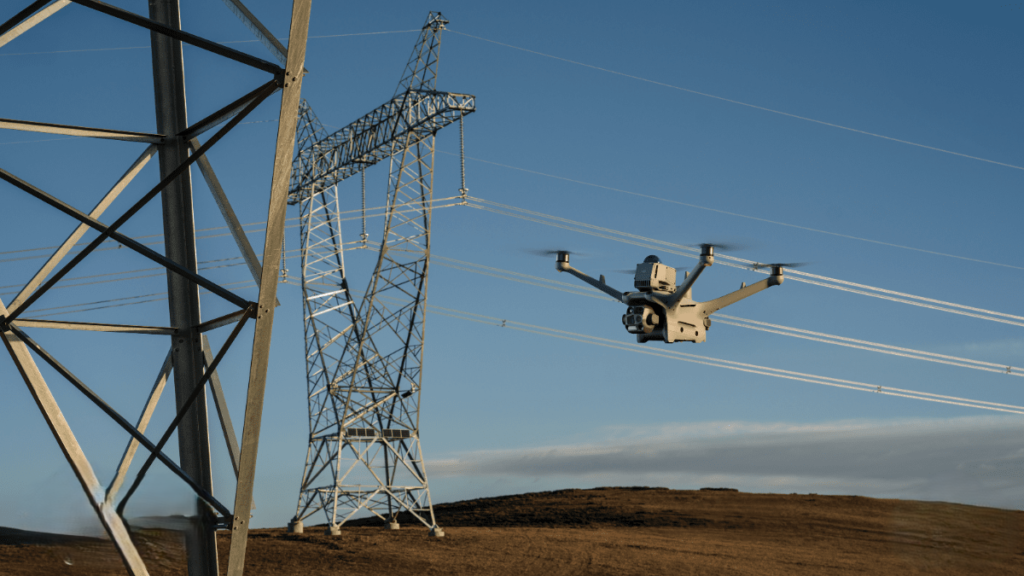
Here, equipment matters as much as frequency. The DJI Matrice 4T carries a thermal camera alongside a high-resolution optical zoom, and together, they read a tower’s condition from a safe distance instead of up close. Specifically, the zoom picks out missing bracing, loosened joints, and structural gaps, so nobody needs to climb the structure to spot them anymore. Meanwhile, the thermal sensor adds another layer, flagging stress points and irregularities the eye alone would miss.
For longer stretches of corridor, the DJI Matrice 400 covers the distance between towers quickly, and its RTK precision ties every finding to an exact location on the line. So instead of a patrol reaching tower forty out of two hundred by the end of the week, a single flight can survey the entire corridor in one pass. As a result, it flags exactly which structure needs attention first.
Built for the Standard This Work Demands
Inspecting national transmission infrastructure isn’t casual work, and nobody should treat it that way. In fact, ARCO Worldwide holds the distinction of being Nigeria’s first licensed commercial drone operator. The NCAA authorises our operations, and we run them under ISO 9001:2015 certified standards. Additionally, as Nigeria’s authorised DJI Enterprise reseller, we bring the exact platforms built for this kind of critical infrastructure work. So we don’t adapt consumer equipment to stand in for the real thing.
Protect your transmission network before the next tower gives out. Get in touch with ARCO Worldwide.